The Giantess of Ġgantija
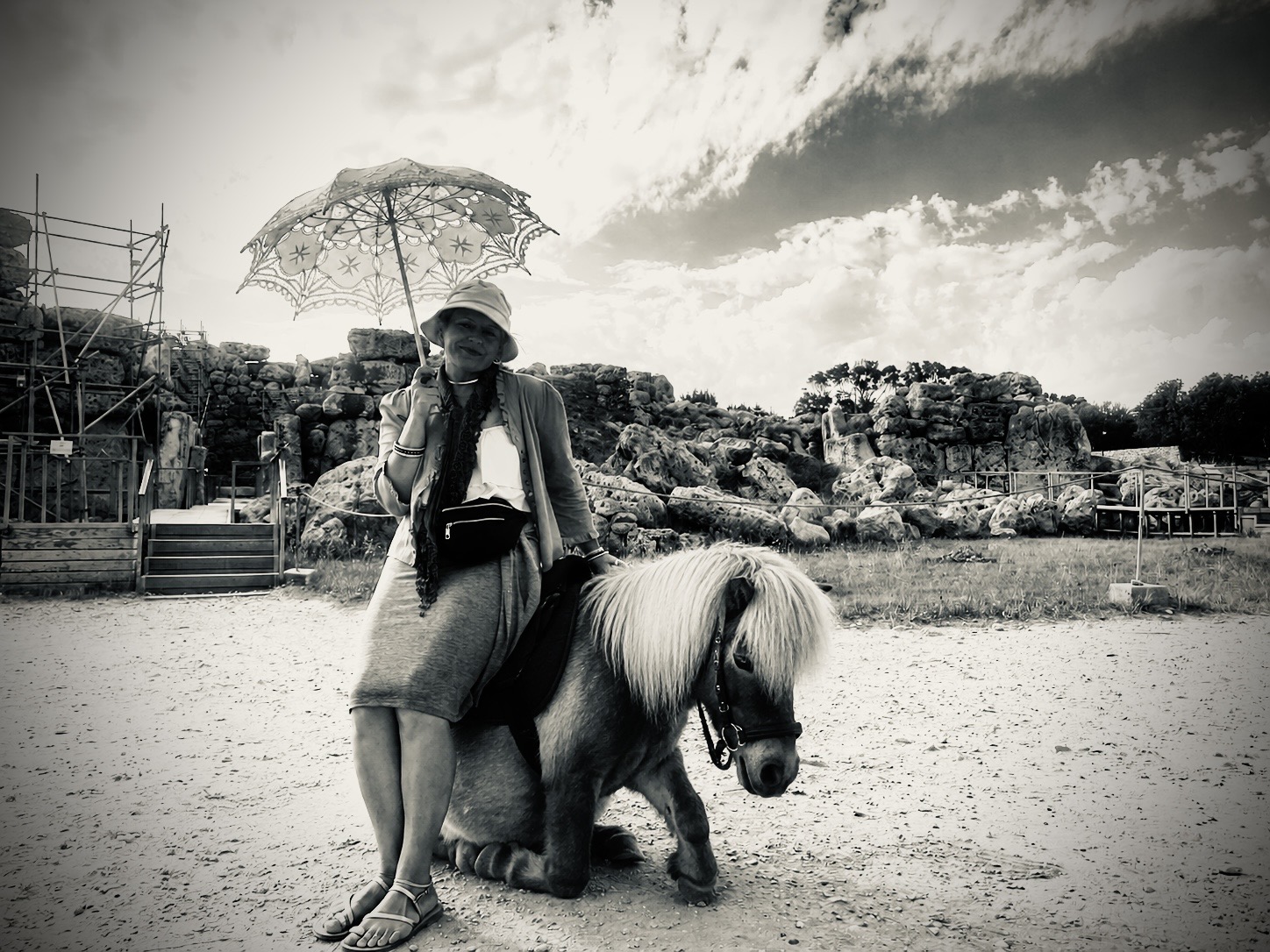
If anyone ever wishes to witness the determination of a woman, watch her move furniture by herself.
I've done it my whole life.
If something needs moving, something needs building, something needs carrying… a determined woman has a remarkable way of finding strength she didn't know she possessed.
Perhaps that is why the old Gozitan legend of the Giantess Sansuna touched me so deeply.
They say she carried her child upon her shoulder while lifting the enormous limestone blocks that became the Ġgantija Temples. Whether the story is literal or symbolic matters less to me than the truth it points toward.
The image itself is magnificent.
A mother carrying life with one arm while shaping civilization with the other.
Coming from a mining background, I have stood beside machinery built for moving rock. I know the weight of limestone. I know that stones weighing dozens of tonnes are not things one simply picks up.
Standing before Ġgantija, I found myself less interested in asking how the stones were moved than why generations of people imagined that such impossible strength belonged to a woman.
That says something.
For centuries the feminine has often been encouraged to become smaller—to fit neatly inside expectations, to apologise for taking up space, to soften her voice, to doubt her own magnitude.
Standing within those ancient stones, I offered a quiet prayer.
I thanked the Giantess—whether she lives in history, legend, or the collective imagination—for reminding me that I need not remain inside the small box I once believed I occupied.
May I become as spacious as my own nature.
May I carry what is mine to carry.
May I help build worlds that nurture rather than diminish.
I also thanked the temple itself for receiving me, and apologised for any offence I may unknowingly have caused while walking upon such ancient ground. Places can hold memory. Whether one believes that spiritually or simply culturally, gratitude felt like the right posture.
As for the little pony…
The original photograph showed a man beneath me. I later replaced him with a miniature pony. It made me smile.
Not because I wished to diminish a man, but because the image became gentler.
The pony represents willing companionship rather than domination; strength offered in service rather than demanded through force. There is something deeply maternal about leading with affection, steadiness, and quiet confidence.
Perhaps that is what the Giantess still whispers through those ancient stones.
Not that women must become greater than men.
But that women need never again pretend to be smaller than they truly are.